Showing posts with label Heritage. Show all posts

23 April 2014

Always dress well

This isn't a fashion blog, but I do on occasion write on the topics of gentlemanliness, chappism, and such. Quite some time back I commented on an article on A Suitable Wardrobe, and referenced a Mises article titled Dress Like its the Great Depression. I'd like to follow up with a brief commentary on the Société des Ambianceurs et des Personnes Élégantes.

I'd never heard of "sapeurs" until a recent bit on NPR, but I am fascinated by them. Aside from the absolute bombast of some of their attire, I am captivated that in the midst of the poverty that surrounds them, they choose to dress to the nines.
Hector Mediavilla/Picturetank
(http://www.npr.org/blogs/pictureshow/2013/05/07/181704510/the-surprising-sartorial-culture-of-congolese-sapeurs)
Now, given the examples one can find from an Internet search, some of the younger gents are a little too dandy for my tastes, but the older gentlemen dress quite well.

I understand the rebellion aspect of these Congolese gents, but I think it's a great example of dressing well, even when the environment one finds himself in is in diametric opposition. Compare that to the United States, where even our poor are rich compared to the rest of the world, and we have people of all social strata walking around like this (I'll not debase my site by actually posting any of these preposterous images).

02 August 2013

The first branch of the Mabinogi

From the Oxford University Press Blog:
In celebration of the National Eisteddfod of Wales, we thought an excerpt from a Welsh classic would be appropriate. The Mabinogion is the title given to eleven medieval Welsh prose tales preserved mainly in the White Book of Rhydderch (c.1350) and the Red Book of Hergest (c.1400). They were never conceived as a collection—the title was adopted in the nineteenth century when the tales were first translated into English by Lady Charlotte Guest. Yet they all draw on oral tradition and on the storytelling conventions of the medieval cyfarwydd (‘storyteller’), providing a fascinating insight into the wealth of narrative material that was circulating in medieval Wales: not only do they reflect themes from Celtic mythology and Arthurian romance, they also present an intriguing interpretation of British history. Below is an excerpt from the tale ‘The First Branch of the Mabinogi’.
Click here for the full article.

30 November 2012

St. Andrew’s Day

Growing up as an Nth generation American, none of my ancestral heritage was passed down to me. My dad's family sort of knew they came from Wales and had some Cherokee blood in there somewhere. My mom's family thought the might be Scottish. Getting past the Blevins and Blackwood names, I know even less of the families they married into. One thing I am sure of genealogically is that I am a Celtic mutt. 

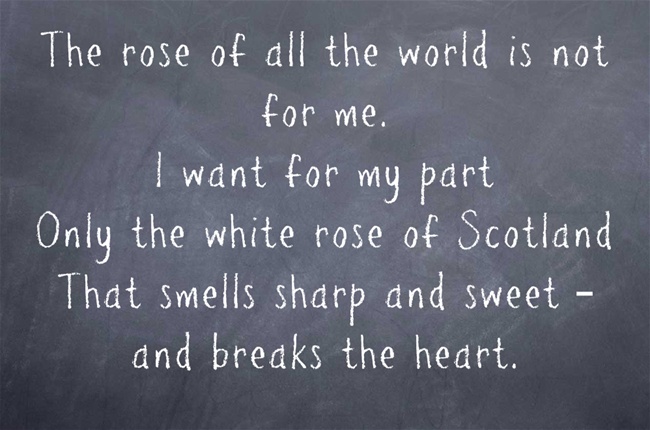
My goal is to prune away generations of cultural neglect to find the beautiful rose of my mixed Celtic heritage. It's a bit fun to wade through the ambiguity to find fact. Some of it requires a measure of common sense and creativity to decipher. My Dad's mom's mom was Lottie Ervin Stinson, which originally was Stevenson many generations ago in Scotland. So "Stevenson" pronounced with a thick Scottish brogue was "Stee'enson", which over time and as recorded by various census takers became "Stinson". Coincidentally, My Dad's dad's mom's mom, Laura Ada Stinson, came from the same line of Stinsons.

With that said, here is an excellent piece from the University of Oxford Press on St. Andrews Day:
Celebrating Scotland: St Andrew’s Day:
30 November is St Andrew’s Day, but who was St Andrew? The apostle and patron saint of Scotland, Andrew was a fisherman from Capernaum in Galilee. He is rather a mysterious figure, and you can read more about him in the Oxford Dictionary of National Biography. St Andrew’s Day is well-established and widely celebrated by Scots around the world. To mark the occasion, we have selected quotations from some of Scotland’s most treasured wordsmiths, using the bestselling Oxford Dictionary of Quotations and the Little Oxford Dictionary of Quotations.
There are few more impressive sights in the world than a Scotsman on the make.
J. M. Barrie 1860-1937 Scottish writer

Robert Burns 1759-96 Scottish poet
From the lone shielding of the misty island
Mountains divide us, and the waste of seas –
Yet still the blood is strong, the heart is Highland,
And we in dreams behold the Hebrides!
John Galt 1779-1839 Scottish writer
O Caledonia! Stern and wild,
Meet nurse for a poetic child!
Sir Walter Scott 1771-1832 Scottish novelist

Hugh MacDiarmid 1892-1978 Scottish poet and nationalist
O flower of Scotland, when will we see your like again,
that fought and died for your wee bit hill and glen
and stood against him, proud Edward’s army,
and sent him homeward tae think again.
Roy Williamson 1936-90 Scottish folksinger and musician
I love a lassie, a bonnie, bonnie lassie,
She’s as pure as the lily in the dell.
She’s as sweet as the heather, the bonnie bloomin’ heather –
Mary, ma Scotch Bluebell.
Harry Lauder 1870-1950 Scottish music-hall entertainer

Robert Crawford 1959– Scottish poet
My poems should be Clyde-built, crude and sure,
With images of those dole-deployed
To honour the indomitable Reds,
Clydesiders of slant steel and angled cranes;
A poetry of nuts and bolts, born, bred,
Embattled by the Clyde, tight and impure.
Douglas Dunn 1942– Scottish poet
Who owns this landscape?
The millionaire who bought it or
the poacher staggering downhill in the early morning
with a deer on his back?
Norman McCaig 1910–96 Scottish poet
The Little Oxford Dictionary of Quotations fifth edition was published in October this year and is edited by Susan Ratcliffe. The Oxford Dictionary of Quotations seventh edition was published in 2009 to celebrate its 70th year. The ODQ is edited by Elizabeth Knowles.
The Oxford DNB online has made the above-linked lives free to access for a limited time. The ODNB is freely available via public libraries across the UK. Libraries offer ‘remote access’ allowing members to log-on to the complete dictionary, for free, from home (or any other computer) twenty-four hours a day. In addition to 58,000 life stories, the ODNB offers a free, twice monthly biography podcast with over 130 life stories now available. You can also sign up for Life of the Day, a topical biography delivered to your inbox, or follow @ODNB on Twitter for people in the news.
Subscribe to the OUPblog via email or RSS.
Subscribe to only language, lexicography, word, etymology, and dictionary articles on the OUPblog via email or RSS.
View more about the Little Oxford Dictionary of Quotations on the  
View more about the Oxford Dictionary of Quotations on the

29 November 2012

The sinking of the Bounty

I'm not a sailing man (that would be my brother), but it's sort of sad to read the account of the sinking of the Bounty:
'Bounty Loves Hurricanes': A Legendary Ship's Final Hours Battling Sandy: As Hurricane Sandy approached the East Coast in late October, Captain Robin Walbridge wanted to save his ship, the legendary Bounty. He set out to sea to ride out the storm -- a decision which ended in disaster. He lost the ship, a crewmember and his own life.

26 November 2012

My connection to Clan Douglas

Some time back I became interested in my Scottish roots and discovered that my maternal ancestors, the Blackwoods, were historically associated with Clan Douglas. I understand that normally, Scottish clan association is paternal, but given that my paternal ancestry is Welsh, I was curious if I could actually claim clanship through my mother's line, so I contacted the Court of the Lord Lyon to enquire.

Armed with this affirmation, I continue down the rabbit hole that is genealogy. 

I have to admit though, that the Blackwood line appears to be a little easier to trace than the Blevins line has proven to be. I have a fairly unbroken line from me to the Blackwoods who settled in North Carolina. The first Blackwood that I have found reference to in American was a William Blackwood who came over with a group of Presbyterians, first to Pennsylvania, and then on to North Carolina.  Here is my line to this gentleman:

Me > Donna Kay Puckett (Blackwood) > Wes Chester (1931-1997) > James Wesley(1884-1939) > James Monroe (1853-1924) > Joseph (1833-1863) > Isaac (1775-1855) > James (1732-1810) > William (1706-1774)

This William Blackwood was the son of Charles Blackwood (b.1680) and Agnes Hunter and was born in Glencarin, Dunfries, Scotland, and christened on 11 August 1706. He married Elizabeth "Betsy" Craige after he had moved to Londonderry, Northern Ireland. They are purported to have immigrated to  Philadelphia 1740 aboard a ship named "Mary William", but I've found no ship of such name, though there were ships named Mary, Mary Ann, and William destined from Northern Ireland to Philadelphia about that time.

To be continued...

Sources:

17 May 2012

Military tradition under fire

I've read in several British and Scottish news outlets lately that historic regimental names are at risk of being done away with. From the BBC:
MoD to 'protect' regiment names: The Ministry of Defence says it is seeking to preserve the regimental cap badges of Scotland's historic army regiments.
I am very much an advocate for worthy traditions, and having served in the military, it would be a shame for any nation to strip its services of historic institutions and emblems. This is akin to telling the 1st Infantry Division that they can't be the "Big Red One" anymore. I doubt that US military advocates would stand for this, and I hope that our UK counterparts will likewise stand for the Black Watch and protect their military heritage.

16 May 2012

Re-Minting the San Francisco Mint

A great article on undoing some of the architectural "progress" inflicted on the old San Francisco Mint building:

Steampunking An Old Building To Make It More Efficient:
Steampunk, a genre of literature that takes place in a steam-engine powered world often containing futuristic VIctorian innovations, has inspired movies, music, and an entire lifestyle (need some clothes? Check out the Steampunk Emporium).
See all stories on this topic »

Co.Exist

It's nice to see that others are starting to realize that our forebears may have actually known a little about what they were doing. 

07 May 2012

Cinco de Mayo

A great history lesson from Jesús Ávila for gringos like me who see Cinco de Mayo as the Mexican St. Patrick's Day:
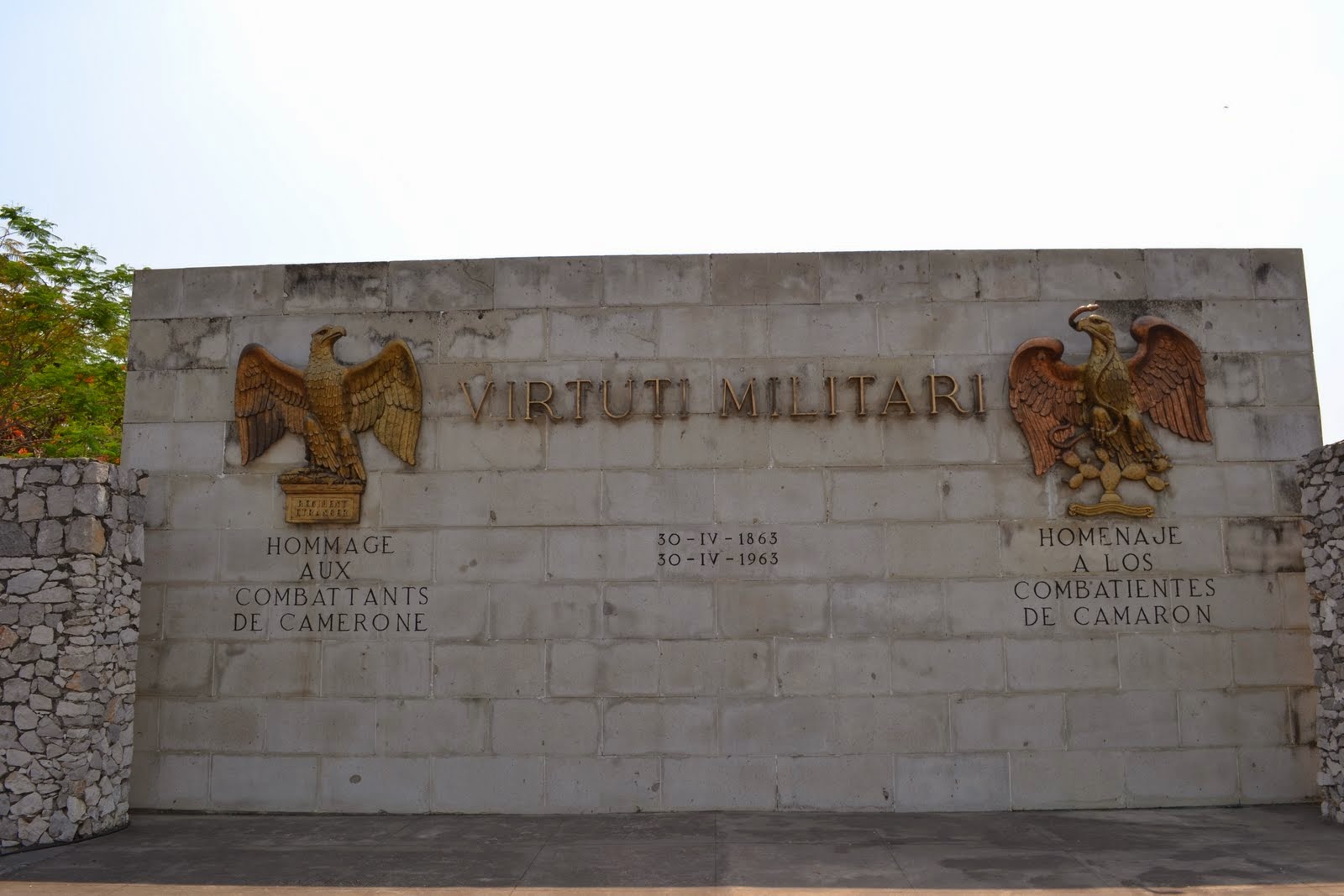
The Battle of Camarón, April 30, 1863:
I write this tedious and long entry at this time of patriotic celebrations and to celebrate that infamous battle of May 5, but the main reason is to emphasize something very specific: it is little known about the influence of historical events occurred in that have led our nation in his remembrance flags and / or foreign symbols, that is why today we will have a bit of history in a comprehensive text that can not be summarized.

On July 17, 1861 Mexican President Benito Juarez issued a moratorium on external debt of the country, suspending for a period of two years, after which pledged to resume, this problem opted as historically known as the French Intervention.

It was May 5, 1862 when General Charles Ferdinand Latrille, Earl of Lorencez, commanding the French troops ordered the assault on the forts of Loreto and Guadalupe, who defended the city of Puebla under General Ignacio Zaragoza, the army invader was repulsed with heavy losses while trying to repeatedly take the fortifications. In the end, had to leave the field and retire defeated and pursued by the Mexican cavalry.

In 1863, with the arrival of numerous reinforcements and another general, Frederick Elie Forey, it was decided to strike again Puebla. The new troops received from France were three battalions of the Foreign Legion under Colonel Jeanningros, an efficient veteran with over 30 years of service, who had participated in the Battle of Moulay-Ishmael in Algeria. Two of its battalions landed at Veracruz on March 31, 1863 and the third would in the coming days.

In March of that year, and 13,000 French soldiers marched on the Mexican subsidiary heroic city of Veracruz separating the capital. A French Legionnaires, to their disappointment, they were assigned menial tasks such as guarding convoys in the eastern section, where there were many diseases such as yellow fever and typhoid. In this regard, the commander of the French army, General Elie Forey Frederic, had indicated that he preferred that they were foreigners and French who had the responsibility to defend the most unhealthy area, ie the tropical zone between Veracruz and Cordoba, where reigned malaria.

Since its establishment in 1831 by King Louis Philippe, much of French public opinion regarded the Legion as a disgrace and was deeply offended by the fact that foreign mercenaries were employed to fight the battles of France, for all boxes, except for the officers, but were not French citizens of other countries listed under very difficult conditions.

On 15 April a convoy of 64 wagons carrying several guns intended to demolish the defenses of Puebla, ammunition, supplies and chests of gold to pay troops, sailed from Veracruz. Mexican intelligence was good, because she soon became aware of the existence of this convoy.

The civil and military governor of the State of Veracruz, Colonel Don Francisco de Paula Milan, joined a force of three infantry battalions of 400 men each: the National Guard battalion from Veracruz, the National Guard battalion of Cordoba and the National Guard battalion of Xalapa, plus 800 -500 Lancers cavalry and 300 irregular-to intercept and capture the enemy precious cargo. At first glance appeared to be an easy task, particularly because the Mexican cavalry was very efficient and was armed with repeating rifles, at the same time, maintain the safety of this convoy was of particular concern to the French, why on 27 April the commander of the Legion, Colonel René Jeanningros, who had established his headquarters in Chiquihuite, decided that the third company of the First Regiment of the Legion was to carry out the task of escorting him as tread the area of ​​responsibility. Most of that company officials were ill. Three officers volunteered: Captain Jean Danjou, assistant staff of the company, Lieutenant Napoleon Villain and Maudet Second Lieutenant. These men formed a formidable trio. Captain Danjou was a legionary with several years old who served with distinction in Algeria, Crimea and Italy. In Crimea lost a hand, which was replaced with a wooden prosthesis. Villain and Maudet apparently were French, but enlisted as a Belgian since, as noted, the Legion forbade French citizens enrolaran soldiers. These men started as privates, effectively fought and were promoted to the rank of officers in recognition of the behavior demonstrated in the Battle of Magenta. The company to which they belonged was composed of a total of 120 soldiers, but at that time only 62 men of Polish, Italian, German and Spanish, were suitable for the task.
Captain Jean Danjou

Second Lieutenant Maudet

Lieutenant Napoleon Villain 
On 29 April, four weeks after his arrival in Mexico, the troops under Danjou were prepared to perform this action routine and joined the convoy to protect the next phase of its journey. At midnight the third company, provided with 60 rounds per man, left Chiquihuite in advance mission in anticipation of the convoy to travel to check the path was clear. At 02:30 on 30, reached a post defense prepared by the Legion at Paso del Macho and the commander of this, Captain Saussier, impressed by the small number of the escort, offered a firing Danjou reinforcement, which this declined, continuing the march, for which divided his force into two sections separated by 200 meters away, while he, center, leave with the supplies. Behind was a small detachment of rear. However, lacked advanced Danjou, because the Legion did not have cavalry.

Shortly before 06:00, the third company passed through the village of Camarón, or "Camerone" as the name given by the French, which, like all villages in the region, was half destroyed by the war. The main building, known as the Hacienda de la Trinidad, was a modest little house with adobe buildings around. A mile and a half of shrimp, Danjou ordered his troops to stop for breakfast rations, and as a preventive measure ordered to deploy some sentries. A few minutes later came the alarm. The Legionaries noted that a strong contingent of Mexican cavalry was approaching the place. Danjou immediately ordered his men to prepare their rifles and defensive form a rectangle. The Legionnaires had only a natural advantage in that open field, what was the profuse vegetation, which became a natural barrier against cavalry opponent. When Mexicans were within walking distance, the legionnaires, shouting "Long live the Emperor!" Opened fire blocking their advance. Mexicans chose not to risk a charge and ejecutarron a maneuver to encircle them. Danjou then ordered a retreat to the only place where they could organize and maintain a sustained defense, not the Paso del Macho as some claimed, but the Shrimp farm. In small groups, the Mexican cavalry harassed the company of the Legion while it was heading towards its goal, making your withdrawal hell. Legionnaires twice stopped and drove back with shock. Finally Danjou and most of his men reached their objective but at the cost of rations and ammunition mules. Forty-six of them reached the farmhouse, some wounded, others 16 were intercepted and captured by the forces of Milan. The worst thing for the French was that the Mexicans were able to reach the shrimp almost simultaneously, which were located in the upper and one of the stables located at the corners.

The Legionnaires were in a very difficult position. The outer walls of the ruined property had a perimeter of 50 meters wide and 50 long and a height of three meters. Two large doors on the west side and a hole in the east were the points of access. Furthermore, only had 60 rounds per man. But Danjou was a veteran accustomed to impossible situations. He immediately ordered the clear barricade and deployed his men into defensive position. For Legionnaires' bad luck, the courts were exposed to fire from above and Mexican Danjou could do nothing to neutralize them. Another part of the Mexican cavalry dismounted and ran fierce attacks, but the Legionnaires refused. Shortly after 09:00, in the midst of a scorching sun, Colonel Milan sent a Mexican officer of French origin, the young lieutenant Ramon Laine, demanding the surrender of the legionaries. Danjou dismissed the suit with a resounding no and then went to each of his men who promised to fight to the end.

At approximately 11:00 a bullet fired by a sniper, possibly hidden in the stables, took the lives of Danjou. Villain Lieutenant quickly took command of the defense. Around noon the legionnaires heard the sound of bugles, and the Zouaves, located on the roofs, they observed a column of soldiers approaching. There was a general enthusiasm thinking that it was French military reinforcements, but the excitement soon faded when he realized that Mexican reinforcements were ordered by Colonel Milan, consisting of three battalions of infantry Vercruz the National Guard, the National Guard Xalapa National Guard and Cordoba. The situation was complicated Legionnaires, as well as the loss of their energetic commander, were now surrounded by two thousand enemy soldiers. With these troops, the Mexican fire became more intense and raids occurred more frequently. The hours passed, the heat increased, and the legionaries began to suffer the effects of thirst and dehydration, as water from their canteens had a good time was up. Villain had a defense as courageous as that of Danjou, but around 14:00 hours fell riddled with intense Mexican fire. The command fell to second lieutenant Maudet.

Again Colonel Milan, a man of honor, prouso the surrender of the legionaries, ensuring life. Maudet refused. The Mexicans decided it was the right time to launch a frontal assault and reduce once and for all his enemies. One however was not enough. Consequently, waves of attacks attempted to break the tight defense but the accurate shooting of the disciplined French troops held them. On several occasions Maudet men crossed the yard to help their fallen comrades, which was usually fatal. Failed attacks, Mexicans set fire to the surroundings of the French position, which was becoming a living hell. Great courage was displayed by both parties while the struggle reached its climax. Even the poorly trained Mexican irregular fought with stoic courage during repeated attempts to enter through the doors and windows. The vast majority of them were killed by impact of bullets and bayonets of the legionaries, and their bodies were returned helpless on the patio.
Colonel Francisco de Paula Milan

Around 17:00 hours only 12 remained standing Legionnaires to contain the Mexican offense. New calls were made to surrender not accepted. Surrounded by the corpses of their comrades in arms, were willing to die. At 18:00 hours only had five legionaries, capes Maine and Berg and soldiers Constantin, Leonard and Wensel, who had very little ammunition. Over the next few minutes Maudet, who by then was wounded, ordered his men to shoot the last volley of bullets, bayonets and charge prepare Mexican troops to die with honor. During the fight the legionnaires had fired over 3,000 rounds. In seeking to perform this action Maudet again received a bullet and fell unconscious, while two of his men were killed. The survivors, capes Maine and Berg and satin Wensel, a Polish-retreated to be shoulder to shoulder against one of the walls of the hacienda, presenting their bayonets as the only defense.


Before this show Mexican soldiers hesitated whether to finish them or spare their lives. His doubts were resolved with the emergence of a Mexican officer, Colonel Lucio Cambas Angel, who also was of Gallic origin. After appeasing his men, he addressed his adversaries in perfect French with the words: "Now I guess you will pay."

Corporal Maine realized that although this man had the bearing of a Frenchman and spoke perfect French language was as Mexican as Juarez and therefore an enemy, who, for purely humanitarian reasons, wanted to save their lives. Watching his two comrades, said: "We surrender, but let us stay with our arms and care for our wounded." Colonel Cambas responded with a military salute, and raising his sword in sign of respect said: "A man like you is granted whatever". Cambas demonstrate an attitude of chivalry and the behavior of a true soldier, with a high sense of honor to the army uniform who fought with courage. He immediately ordered the wounded Legionnaires were served.

On being informed of the surrender, Colonel Milan said: "But these are not men, are demons". The Mexicans gave their opponents the major considerations. Twenty-three legionaries were assisted by the troops and 16 of them survived their wounds. He did his best to save the life of Lieutenant Maudet and sent along with a sergeant, also severely wounded, hospital Huatusco, a distance of 80 kilometers. Given the precarious situation of the hospital, Maudet was finally brought home from Marredo Juana Gomez, distinguished Mexican lady known for her charitable work. Despite the efforts provided by Dona Juana, the French officer pass away, but not before writing the following words: "I left a mother in France, I found another in Mexico."
The Mexicans caused the Legionaries 26 deaths: three officers and 23 soldiers, but to turn 300 of his men lay dead and wounded. Nor could they take possession of guns nor the spoils, as the convoy, heard the shots and found a distance, managed to evade the action, bringing the initiative to march in advanced Danjou gave an appropriate result for French interests. The next day, Colonel Jeanningros Shrimp arrived at the head of a column of rescue, but it was too late. The Mexicans had departed, leaving only the bodies of legionaries killed in action. Beside them stood a wounded man, who was presumed dead, with eight bullets in his body, who narrated the heroic episode starring his comrades before superior forces. From prison, Corporal Berg Evaristo was able to get a note to Jeanningros which concluded with these words:

"The 3rd Company of the 1st Regiment Colonel's dead, but she did too, and so it can be said, had a few brave soldiers."
The return from captivity Berg would be promoted to officer. The other prisoners involved in the incident Shrimp, including the 16 Legionnaires captured during the retreat to the farm, ie a total of 32 men, were exchanged for Mexican officers captured by the French and most remained at the legion. The Maine place was also promoted to officer and attained the rank of captain. The other survivors and Wensel, Schaffner, Fritz, Pinzinger and Brunswick were made Knights of the Legion of Honor of France, while the classes Magnin, Palmaert, Kunassec, Schreiblick, Groski Rebares and received the Military Medal.

This extraordinary act of courage, which lasted continuously for eleven hours, was a victory for the French unprecedented moral being fought against all odds. And while a valuable combat unit made up of men loyal and determined to give his life for the French cause had been exterminated, their action helped save a valuable convoy and raised the morale of the soldiers who fought for the implementation of the French strategy in Mexico. More importantly for the traditions of the Legion, the wooden hand of Captain Danjou was found by Colonel Jeanningros in the ruins of the Shrimp and became the most precious relic of the military. Such was the impact of the action of the third company of the first regiment of the Legion, for the rest of the French occupation of Mexico, that country's troops had to stop and present arms when crossing against the estate of Camarón.

The date of the Battle of Camarón was erected in 1904 in a ritual event for the Foreign Legion, and today is celebrated with great pomp and respect in the courtyard of the headquarters of the Legion in Aubagne, near Marseille. The hand of Captain Danjou, stored in a small urn, is displayed in front of the regiments and a count of the battle is read each of the units of the Legion on the day of the ceremonies. The ashes of others killed in the shrimp are preserved in a reliquary, while the Mexican eagle, which became the flagship of the first regiment is paraded around the chapel. The word "Camerone" is inscribed in gold letters on the walls of Les Invalides in Paris.


The celebrations have spread to Mexico. In 1892 France was authorized to erect a monument, renovated in 1963 by the Mexican government, at the one hundredth anniversary of this battle, whose inscriptions read: "There were less than sixty opposed to an army. Life these French soldiers left before that courage the April 30, 1863. " The ceremonies are attended by French citizens living in that country and Mexican army officers, for whom of course not surprising the maximum of the Legion: "Every legionnaire Shrimp has carved his heart."


02 May 2012

A look back on the 400th anniversary year of the King James Bible

A look back on the 400th anniversary year of the King James Bible:
By Gordon Campbell
The celebrations of the 400th anniversary of the King James Bible were in one respect a surprise. As the Archbishop of Canterbury commented at the end of the year, the KJB had not been treated “simply as a possession of religious believers,” much less as a “preserve of the Church,” but rather as part of a wider cultural legacy throughout the English-speaking world. This did not reflect, in the Archbishop’s tolerant view, a diminution of the Bible’s standing as a sacred text, but rather extended its significance beyond the spiritual to the cultural sphere.

No one would mount the same argument for modern translations. Bibles such as the New Revised Standard Version, the English Standard Version, and the New International Version are associated with religious believers, sometimes of a particular religious persuasion, and seem not to be of particular interest beyond the world of the churches.

The origins of this distinction lie in the Bible as Literature movement, which first emerged at Harvard with the publication of the lectures of John Hays Gardiner as The Bible as English Literature (1906). Gardiner argued that the King James Bible is literature, whereas the Revised Version is a sacred text. This did not mean that he treated the KJB as a secular text. Gardiner explains that he has “assumed the fact of inspiration, but without attempting to define it or to distinguish between religious and literary inspiration.” The consequence of this conflation is that literary study of the Bible should be ‘reverent in tone’.
A century later, Gardiner’s observations still have force. Christianity has its enemies, but even the most vociferous of the New Atheists has a soft spot for the King James Bible. Richard Dawkins, for example, has said that “not to know the King James Bible is to be, in some small way, barbarian,” and the late Christopher Hitchens chimed in with an affirmation of the timelessness of the KJB, which “resounded in the minds and memories of literate people, as well as of those who acquired it only by listening.”
This secular reverence for a religious text was one of the features of the anniversary year. I gave some sixty lectures in the course of the year, and although the venues included a clutch of cathedrals and a healthy sprinkling of churches of various denominations, they also included golf clubs and gentlemen’s clubs, pensioners’ groups and literary festivals. In the United States, I lectured at a university club in New York, at an Episcopalian church, at the splendid exhibitions mounted by the Green Foundation, and at a few Christian colleges, but I mostly lectured at secular universities. It became clear not only that the KJB maintained its place in a variety of faith communities, but that it also has a respectful following among people who are interested both in its literary qualities, and in its historical and cultural impact.
Large numbers of people have emerged from the anniversary year knowing more about the King James Bible than they knew at the beginning of the year. Thousands have attended lectures, and many more have bought one of the histories of the KJB. My own book on the subject has sold in gratifying numbers, and many people have written to me expressing gratitude for what they have learned (and occasionally offering corrections, now incorporated into the paperback). Perhaps the most startling realisation for many people was that the KJB on their shelves is not the text of 1611, but a modernised text of 1769 which differs in some 16,000 instances from the original. To give but one example, ‘For in this we grone earnestly, desiring’ (1611) is changed in 1769 to ‘For in this we groan, earnestly desiring’ (2 Corinthians 5.2); the repositioning of the comma changes the meaning.

Curiosity about the original text has led to large numbers of sales of the 400th anniversary edition of the KJB published by Oxford University Press. There are signs that this text is being adopted by the scholarly community, as this is the only old-spelling text now on the market. In all, the anniversary year has been a jolly good thing, and I am not alone in having learned a lot from the conversations and debates that emerged in the course of the year.
Gordon Campbell is Professor of Renaissance Studies at University of Leicester. His recent books for OUP include Bible: The Story of the King James Version (2010), The Holy Bible: Quatercentenary Edition (2010), The Grove Encyclopedia of Northern Renaissance Art (3 vols, 2009), John Milton: Life, Work and Thought (2008), Milton and the manuscript of ‘De Doctrina Christiana’ (2007), The Grove Encyclopedia of Classical Art and Architecture (2 vols, 2007), The Grove Encyclopedia of Decorative Arts (2 vols, 2006), Renaissance Art and Architecture (2004), and The Oxford Dictionary of the Renaissance (2003). His next book, to be published by OUP in Spring 2013, will be entitled The English Ornamental Hermit.
Subscribe to the OUPblog via email or RSS.
Subscribe to only religion articles on the OUPblog via email or RSS.
View more about this book on the

01 May 2012

Heraldry Exhibit at the National Library of Ireland

The National Library of Ireland has a wonderful exhibit on Irish Heraldry:
Heraldry: Coats of Arms Uncovered!: Heraldry had its birth on the battlefields of Medieval Europe. To distinguish themselves in battle, knights had unique, identifying designs painted on their armour.
www.nli.ie/heraldry_site/

26 April 2012

Honorary Colonel in the Alabama State Militia

Most people are familiar with the institution of Kentucky Colonels through the most famous Kentucky Colonel, Colonel Harland Sanders. Another famous Colonel is worth mentioning is Colonel Tom Parker, Elvis Presley's manager. He received his commission from the Governor of Louisiana in 1948. He proudly bore the moniker for the rest of his life. Kentucky Colonels even have a non-profit organization for benevolent activities and to promote the Commonwealth of Kentucky. What many people may not know, however is that many states, especially in the South, also maintain similar, but less high-profile traditions of Honorary Colonels.

I have recently had the privilege of being commissioned an Honorary Colonel in the Alabama State Militia. There was no fanfare nor trip to the State Capitol for this recognition, but I am very proud to be amongst such an elite cadre. I received a certificate from Governor Robert Bentley's office that stated the following:
Jeremy B. Blevins, having been deemed of meritorious character, is hereby commissioned as an Honorary Colonel in the Militia of the State of Alabama. He is, therefore, carefully and diligently to discharge the duties of the office to which he is appointed by doing and performing all manner of things thereunto belonging. And I do strictly charge and require all Officers and Soldiers under his command to be obedient to his orders ad directions, from time to time, as he shall receive from me, or the future Governor of the State of Alabama, or of the General or other Superior Officers set over him, according to the laws for the regulation and government of the Alabama State Militia.

So what is an Honorary Colonel in the Alabama State Militia?

Composition and Administration of the State Militia Generally

To determine what an Honorary Colonel in the Alabama State Militia is, how one is appointed, and what one's duties are, the reader must dissect the sections of the Alabama Code pertaining to the militia in general. The "laws for the regulation and government of the Alabama State Militia" are cataloged in Title 31 of the Alabama Code: "Military Affairs and Civil Defense". § 31-2 is the military code for the State of Alabama. § 31-2-2 states:
The militia of this state shall consist of all able-bodied male citizens, and all other able-bodied males who have declared their intention to become citizens of the United States, between the ages of 17 and 45, and who are residents of the state, and of such other persons, male and female, as may upon their own application, be enlisted or commissioned therein pursuant to any provisions of this chapter, subject, however, to such exceptions and exemptions as are now, or may hereafter be created by the laws of the United States, or by the Legislature of this state, it being specifically provided that, in the event federal laws or rules and regulations promulgated pursuant thereto authorize and permit service in units or organizations of the organized militia, as defined in this chapter, by persons of more than 45 years of age, such persons are hereby authorized to continue to serve in the organized militia for so long as may be allowed by such laws, rules or regulations, all other conditions, qualifications or requirements as to eligibility for service being complied with. All affairs pertaining to the state military forces shall be administered by the State Military Department, which shall be headed by the Adjutant General, who shall be responsible to the Governor as Commander in Chief.
(Acts 1957, No. 591, p. 828, §1; Acts 1973, No. 1038, p. 1572, §2.)
This provides a basis for the well regulated Militia as mentioned in the Second Amendment of the United States Constitution within the context of the citizenry of the State of Alabama.  § 31-2-3 further defines this well regulated militia into organized and unorganized components:
The militia of the state shall be divided into the organized militia, the retired list and the unorganized militia, which together shall constitute the state military forces. The organized militia shall be composed of: an army national guard and an air national guard which forces, together with an inactive national guard, shall comprise the Alabama National Guard; the Alabama Naval Militia; and the Alabama State Guard, whenever any such force is organized by the Governor pursuant to existing laws. The National Guard, army or air, shall consist of such organizations and units as the commander in chief may from time to time authorize to be formed, all to be organized in accordance with the laws of the United States affecting the National Guard, army and air, and the regulations issued by the appropriate Secretary of the Department of Defense.
(Acts 1957, No. 592, p. 829, §2; Acts 1973, No. 1038, p. 1572, §3.)
Note that the Alabama State Guard (the Alabama State Defense Force, "ASDF") is included in the organized militia. There is no additional definition of the unorganized militia here, but § 31-2-5 more clearly defines the opening sentence of  § 31-2-2:
The unorganized militia shall consist of all able-bodied male resident citizens of the state and all able-bodied resident males who have declared their intention to become citizens of the United States, between the ages of 17 and 45, and of such other persons, male and female, as may, upon their own application, be enlisted or commissioned therein, subject to any existing law, who are not serving in any force of the organized militia and who are not on the state retired list.
(Acts 1957, No. 592, p. 829, §3; Acts 1973, No. 1038, p. 1572, §5.)
Given that the text of the commission never uses the words "State Guard" or "State Defense Force" it is understood that the title of Honorary Colonel exists within the context of the unorganized Militia, and does not automatically place one in the organized ranks of the ASDF. The cadre of the ASDF muster at regular intervals, train, and have a rank structure patterned after the United States Army.

Uniforms and Decorations

§ 31-2-17 - 21 deal with the issue of the wearing of a uniform, which summarized says that an individual is not to wear  a uniform of the United States armed forces if they are not entitled to, and when off-duty, under specific circumstances. Note should also be made with reference to State Defense Forces and the requirement that their uniforms meet a criteria that they "shall include the distinctive mark or insignia prescribed by the Secretary of Defense to distinguish such uniform from the uniform of the United States armed forces" (§ 31-2-17). Were the unorganized militia to be ordered up, they would fall under the ASDF and then be subject to § 31-2-17.

Further down in the code, § 31-2-77 : "Service Medals and Decorations Authorized for Wear with National Guard and Naval Militia Uniforms" defines the wear of decorations on the uniforms of the National Guard and the Naval Militia. The ASDF has its own regulations (ASDF 670-1) as to the wear of decorations that follows Department of Defense Instruction 1334.01 "Wearing of the Uniform", as well as service-specific manuals such as Army Regulation 670–1 "Wear and Appearance of Army Uniforms and Insignia". One would assume that if a uniform is allowed for Honorary Colonels, that it would follow this regulation as well. As a veteran of the Alabama Army National Guard, I have both federal and state decorations that I would be proud to wear on an authorized Honorary Colonel uniform, but the wear of awarded decorations is authorized on civilian clothes per AR 670-1 §30-1b:
For civilian attire, individuals may wear only those awards, decorations, or insignia authorized by this regulation for wear on civilian clothing, in the same manner and approximate location as the equivalent military uniform.
Also AR 670-1 § 30-6:
Retired personnel and former members of the Army (as described above) may wear all categories of medals described in this regulation on appropriate civilian clothing. This includes clothes designed for veteran and patriotic organizations on Veteran’s Day, Memorial Day, and Armed Forces Day, as well as at formal occasions of ceremony and social functions of a military nature. Personnel may wear either full-size or miniature medals. Personnel who wear medals on civilian clothes should place the medals on the clothing in approximately the same location and in the same manner as for the Army uniform, so they look similar to medals worn on the Army uniform.
I am not certain what the guiding regulation is for other branches of service, but I am confident in saying that they are surely similar. Military decorations can look outstanding on a tailcoat for an white tie event. The Department of Veterans Affairs has also encouraged veterans to wear their decorations on Memorial Day. This practice is carried out frequently by organizations such as the American Legion and the Veterans of Foreign Wars, who wear decorations and other patriotic emblems on the sides military-style head gear.

I am aware of other states' Honorary Colonels having official dress uniforms, which bear some resemblance to a mess dress uniform as worn by the Army. I understand that some Kentucky Colonels wear such a uniform to the Kentucky Derby. Stephen Lautens is a Kentucky Colonel sporting such a uniform. The Honorable Order of Kentucky Colonels mentions uniforms on their site.

In relation to uniforms, § 31-2-78 protects the private military property of an individual:
The personally owned uniforms, arms and equipment, required by laws or regulations of every commissioned, warrant and noncommissioned officer, musician and enlisted man of the armed forces of the state, shall be exempt from sale under any execution or other process for debt or taxes.
(Acts 1936, Ex. Sess., No. 143, p. 105; Code 1940, T. 35, §105; Acts 1973, No. 1038, p. 1572, §79.)

Commissions and the holding of Public Office

The next section to deal with the unorganized militia, though indirectly is §31-2-36:
Any citizen of this state may accept and hold a commission or warrant or enlisted membership in the armed forces of the state and reserve components of the United States without vacating any civil office, position or commission held by him. The acceptance or holding of any such military or naval commission or membership and the receipt of pay therefrom shall not constitute such holding of an office of privilege and trust under the government of this state and of the United States as shall be incompatible with holding of any civil office, executive, legislative or judicial, or position or commission under the government of this state.
(Acts 1936, Ex. Sess., No. 143, p. 105; Code 1940, T. 35, §37; Acts 1973, No. 1038, p. 1572, §37.)
Most states, if not all, have a similar provision. One can look to Senator Lindsey Graham of South Carolina to see this. According to his Senate web site: "Graham continues to serve his country in the U.S. Air Force Reserves and is one of only three U.S. Senators currently serving in the Guard or Reserves. He is a colonel and is assigned as a Senior Instructor at the Air Force JAG School.". By the definition of the unorganized militia in § 31-2-2, it is clear that §31-2-36 applies to there as well.

The unorganized militia in active service

The next portion of the Code to deal with the unorganized militia is § 31-2-46, which states:
The commander in chief may at any time, in order to execute the law, suppress riots or insurrections, or to repel invasion, or for the purpose of aid and relief of citizens in disaster, in addition to the active National Guard, the inactive National Guard and the Naval Militia, order out the whole or any part of the unorganized militia. When the armed forces of the state, or a part thereof, are called to duty under the Constitution and laws of the United States or the Constitution and laws of this state, the Governor shall first order out for service the National Guard or Naval Militia, or such part thereof as may be necessary, and, if the number available be insufficient, he may then order out such part of the unorganized militia, as he may deem necessary.
(Acts 1936, Ex. Sess., No. 143, p. 105; Code 1940, T. 35, §54; Acts 1973, No. 1038, p. 1572, §47.)
§ 31-2-47 continues defining the use of the unorganized militia for active service:
Whenever any part of the unorganized militia is ordered out for active military service, or other service which may be necessary in the discretion of the Governor, it shall be governed by the same rules and regulations, and be subject to the same penalties, as the National Guard or Naval Militia. The Governor, in his discretion, may appoint and commission emergency officers in the state militia at any time. Such commissions shall expire at the end of five years from the effective date thereof.
(Acts 1936, Ex. Sess., No. 143, p. 105; Acts 1939, No. 509, p. 774; Code 1940, T. 35, §53; Acts 1973, No. 1038, p. 1572, §48.)
The verbiage in the commission for an Honorary Colonel has no time limitations, this commission is clearly different in that it has a five year expiration.

§ 31-2-48 deals with the creation of units and appointment of officers if the unorganized militia is ordered out:
The Governor shall, when ordering out the unorganized militia, designate the number. He may order them out either by call for volunteers or draft. The unorganized militia may be attached to the several organizations of the National Guard or Naval Militia, or organized into separate divisions, brigades, regiments, battalions, companies or detachments as the Governor may deem best for service. He shall appoint the commissioned officers and warrant officers in the same manner as provided in this chapter for the appointment of officers and warrant officers of the National Guard and Naval Militia.
(Acts 1936, Ex. Sess., No. 143, p. 105; Code 1940, T. 35, §55; Acts 1973, No. 1038, p. 1572, §49.)
With regards to Honorary Colonels, there are two issues to address here. One is that this deals with appointing officers after the unorganized militia has been ordered up, and the second is that the Governor will appoint officers in the same manner as he would officers of the National Guard and Naval Militia. That process is defined in § 31-2-69: 
Officers of the armed forces of the state, including the Adjutant General, shall be appointed, and shall be subject to suspension, discharge, removal or compulsory retirement as such solely on the basis of military proficiency, character and service, as determined by Department of Defense regulations and the military usages sanctioned by the military laws of the United States. The qualifications of personnel of the federally recognized National Guard shall be as prescribed in pertinent regulations and policies of the United States Department of Defense.
(Acts 1973, No. 1038, p. 1572, §70.)
Given that National Guard officers are commissioned through the Reserve Officer Training Corps or Officer Candidate School, § 31-2-48 does clearly does not apply to Honorary Colonels. It might be within the prerogative of the President, Governor, or a field grade officer to conduct a field commission of an individual, but for the past several decades, such a practice has fallen out of precedent. 

Next, § 31-2-49 states:
If the unorganized militia is ordered out by draft, the Governor shall designate the persons in each county or city who are to make the draft and prescribe rules and regulations for conducting the same, which shall conform as nearly as possible to the selective service machinery that is now or may hereafter be provided for by the government of the United States in a national crisis.
(Acts 1936, Ex. Sess., No. 143, p. 105; Code 1940, T. 35, §56; Acts 1973, No. 1038, p. 1572, §50.)
Given the advent of the Department of Homeland Security, this function of the unorganized militia would appear to be superseded.What FEMA cannot handle alone, the National Guard most assuredly could handle.

§ 31-2-50 penalizes those who would refuse duty in the circumstances outlined above:
Every member of the militia ordered out for duty or who shall volunteer or be drafted, who does not appear at the time and place ordered, shall be guilty of a misdemeanor.
(Acts 1936, Ex. Sess., No. 143, p. 105; Code 1940, T. 35, §57; Acts 1973, No. 1038, p. 1572, §51.)
§ 31-2-79 protects members of the militia while in active service:
Members of the militia in the active armed forces of the state shall not be arrested on any process issued by or from any civil officer or court, except in the case of a felony or a breach of the peace, while going to, remaining at or returning from any place at which he may be required to attend for military or naval duty; nor in any case whatsoever while actually engaged in the performance of his military or naval duties, treason and murder excepted, unless with the consent of his commanding officer.
(Acts 1936, Ex. Sess., No. 143, p. 105; Code 1940, T. 35, §106; Acts 1973, No. 1038, p. 1572, §80.)
If § 31-2-79 protects, then § 31-2-83 allows for punishment:
Whenever any portion of the militia shall be called into the active service of the state to execute the law, suppress a riot or insurrection, repel invasion, protect lives and property or in aid and relief of citizens in disaster, the law, including the Uniform Code of Military Justice, the acts of Congress and rules and regulations of the Department of Defense and the regulations prescribed for the United States armed forces shall be enforced and regarded as a part of this chapter until said forces shall be duly relieved from such duty. As to offenses committed when such laws are so in force, courts-martial shall possess, in addition to the jurisdiction and power of sentence and punishment vested in them by this chapter, all additional jurisdiction and power of sentence and punishment exercised by like courts under such laws, including the Uniform Code of Military Justice and acts of Congress and rules and regulations of the Department of Defense and the regulations or laws governing the United States armed forces or the customs and usages thereof; but no punishment under such rules and regulations authorizing the taking of life shall in any case be inflicted except in time of war, invasion or insurrection, declared by a proclamation of the Governor to exist, and then only after approval by the Governor of the sentence inflicting such punishment. Imprisonment other than in a guardhouse shall be executed in county or city jails or other prisons designated by the Governor for that purpose.
(Acts 1936, Ex. Sess., No. 143, p. 105; Code 1940, T. 35, §113; Acts 1973, No. 1038, p. 1572, §84.)
There are many other sections of the Code that deal with the ordering out of soldiers, with most oriented toward the National Guard. Bear in mind that all discussion of active service with regards to active service and Honorary Colonels is purely academic. Honorary Colonels, having their commission in the unorganized militia, upon being ordered up, would become organized militia, and thus would receive a commission as an officer of the ASDF. They would not forfeit their honorary commission, but hold two, much as was the case in the wars prior to World War I.

Role of the Governor as the State's Commander in Chief

§ 31-2-51 states:
The Governor of Alabama, or any other person lawfully administering the duties of the Office of the Governor of the state, shall be commander in chief of all the military and naval forces of the state, except when they shall be called or ordered into the service of the United States, and he shall have the power to embody the militia to repel invasion, suppress insurrection and enforce the execution of the laws, but shall not command personally in the field unless advised to do so by resolution of the Legislature.
(Acts 1936, Ex. Sess., No. 143, p. 105; Code 1940, T. 35, §58; Acts 1973, No. 1038, p. 1572, §52.)
The Governor, as Commander in Chief of the militia forces of the state leads in the same capacity that the President does as Commander in Chief of the United States armed forces, as a civilian who empowers his Generals to execute his commands.

The Governor's duties with this regard are defined in § 31-2-52, which states:
(a) The Governor of Alabama, as Commander in Chief, shall have power and is hereby authorized and directed to alter, increase, divide, annex, consolidate, disband, organize or reorganize any organization, department or unit, so as to conform as far as practicable to any organization, system, drill, instruction, type of uniform or equipment, or period of enlistment now or hereafter prescribed by the laws of the United States and rules and regulations promulgated thereunder by the Secretary of Defense for the organization, armament, training and discipline of the militia or national guard, or by the Secretary of the Navy for the organization, armament, training and discipline of the Naval Militia. For that purpose, the number of officers, warrant officers and enlisted men of any grade in any organization, corps, detachment, headquarters or staff may be increased or diminished and the grade and number of such officers, warrant officers and enlisted men may be altered to the extent necessary to secure, as far as practicable, such conformity.
(b) The Governor, as Commander in Chief, shall have the power in case of war, invasion, insurrection, riot, tumult, breach of peace, natural disaster or imminent danger thereof, to call or order all or any portion or class of the armed forces of the state into the active military or naval service of the state, to increase the land and naval forces of this state and to organize the same in accordance with the existing rules and regulations governing the armies of the United States, or in accordance with such other system as the Governor may consider the exigency to require, and such organization and increase may be either pursuant to, or in advance of, any call, draft or order of the President of the United States.
(c) The Governor may authorize all or any part of the National Guard or Naval Militia to participate in any drill, parade, review or other public exercise, or to engage in service for escort duty, and may prescribe all regulations and requirements therefor, and such expenses incidental thereto as he may authorize shall be paid as provided in this chapter for the militia in the active military or naval service of the state.
(d) The Governor of Alabama, as Commander in Chief, is hereby authorized and empowered to do and perform all acts, and to make and publish such rules and regulations, and to organize and maintain the National Guard and the Naval Militia of Alabama in every respect up to the standards required by the laws and regulations of the United States now existing or which may hereafter be enacted for the benefit of the National Guard and Naval Militia of the United States.
(e) The Governor, as Commander in Chief, is authorized to call out all or any such portion of the National Guard as he may deem advisable, upon his determination that a state of emergency exists.
(Acts 1936, Ex. Sess., No. 143, p. 105; Code 1940, T. 35, §59; Acts 1973, No. 1038, p. 1572, §53; Acts 1980, No. 80-360, p. 480.)
Having established the powers and authorities of the Governor as Commander in Chief, § 31-2-53: provides the basis for commissioning Honorary Colonels:
The personal military staff of the Governor shall consist of one officer with the rank of colonel and as many other officers as the Governor may consider appropriate with the rank of lieutenant colonel or commander, all of whom shall be appointed and commissioned by the Governor and shall hold office at his pleasure. All such officers shall be commissioned in the State Militia as aides-de-camp to the Governor, but no such officer shall be barred, by reason of being a member of the staff, from holding an active commission in the Alabama National Guard or the Alabama State Guard or a reserve commission in the Armed Forces of the United States or any civil office or employment under this state or any agency or political subdivision thereof. No member of the staff shall by virtue of such membership exercise any command or control over any part of the Alabama National Guard.
(Acts 1939, No. 509, p. 774; Code 1940, T. 35, §61; Acts 1973, No. 1038, p. 1572, §54.)
While not using the term "Honorary Colonel", this section states several things to lead to that conclusion. The personal military staff hold their office "at his pleasure". They are not barred from holding an active commission in the National Guard, State Guard, or United States armed forces. And finally, they cannot exercise command over any part of the National Guard.

§ 31-2-69 delineates the appointment of officers per DoD regulations:
Officers of the armed forces of the state, including the Adjutant General, shall be appointed, and shall be subject to suspension, discharge, removal or compulsory retirement as such solely on the basis of military proficiency, character and service, as determined by Department of Defense regulations and the military usages sanctioned by the military laws of the United States. The qualifications of personnel of the federally recognized National Guard shall be as prescribed in pertinent regulations and policies of the United States Department of Defense.
(Acts 1973, No. 1038, p. 1572, §70.)
This wording conflicts with the commissions "at his pleasure" in the section previously mentioned, thus clearly excluding individuals commissioned under § 31-2-53 from the provisions outlined in § 31-2-69.

Unauthorized Military Organizations

While not directly related to Honorary Colonels, pretender, or rump, militias are dealt with in § 31-2-125:
Any two or more persons, whether with or without uniform, who associate, assemble or congregate together by or under any name in a military capacity for the purpose of drilling, parading or marching at any time or place or otherwise take up or bear arms in any such capacity without authority of the Governor, must, on conviction, be fined not more than $1,000.00. This section does not apply to any school or college where military training and instruction is given under the provisions of state or federal laws, nor to the order of Knights of Templar, Knights of Pythias, Patriarchs Militant or Uniform Rank Woodmen of the World.
(Acts 1936, Ex. Sess., No. 143, p. 105; Code 1940, T. 35, §176; Acts 1973, No. 1038, p. 1572, §126.)
 
There are some who debate the constitutionality of such a clause and that argument made is elsewhere. In the historical context, and given the definition of the unorganized militia previously stated, this section of the Code would seem to refer to groups intent on the overthrow of state or federal government. The leaders of these organizations, acting only in the capacity of private citizens, set up for themselves a private military structure. One can wonder why these individuals, if they want to serve, wouldn't just join the federal armed forces, the National Guard, or their state's State Defense Force (Note: not all states have a SDF)? 

Powers and Duties of Honorary Colonels

§ 31-2-70, in dealing with powers and duties of National Guard and Naval Militia officers, states:
In addition to the powers and duties prescribed in this chapter, all officers of the National Guard and Naval Militia of Alabama shall have the same powers and perform the same duties as officers of similar rank and position in the armed forces of the United States insofar as may be authorized by federal law. They are authorized to administer oaths in all matters connected with the service.
(Acts 1936, Ex. Sess., No. 143, p. 105; Code 1940, T. 35, §82; Acts 1973, No. 1038, p. 1572, §71.)
This section clearly enumerates powers of National Guard and Naval Militia officers and does not appear applicable to other officers of the organized or unorganized militia. The next several sections of the Code are likewise inapplicable with regards to Honorary Colonels. There is nowhere in the Code that identifies the powers and duties of Honorary Colonels. As they personal military staff of the Governor, and his aides-de-camp, their powers and duties are whatever the Governor deems them to be. 

The greatest clue as to what these powers might be is in the name: "Honorary Colonel". Just as an honorary doctorate does not mean that the individual has actually done doctorate-level research, an honorary colonelship does not mean the recipient has the years of service required to lead troops.

Conclusion

While never explicitly using the term "Honorary Colonel" in the Alabama Code, the office past and present has a clear place in the heritage of the great State of Alabama. The Governor's prerogative to appoint such individuals is codified in § 31-2-53.

Looking back at the Kentucky Colonels, the post is ceremonial and they serve as goodwill ambassadors for the Commonwealth of Kentucky.

Likewise, the Honorary Colonels in the Alabama State Militia are goodwill ambassadors for the State of Alabama. They are individuals that the Governor has determined to present this honor to. I am very proud to have received such an honor.

Update: 19 July 2012

Since I originally created this post, I have been contacted by several individuals interested in Alabama Colonelcy. Given the dearth of information on this subject that is available online, my discussion on the matter seems to draw some attention.

I'd like to share some information that I received from Kelley Lee, the the Governor's Proclamations Officer, on the subject. With regards to who can receive the honor, the Proclamations Office "only supplies Honorary Colonel certificates to U.S. citizens, specifically Alabama citizens and residents. ". Following that, I asked if there were any authoritative resources on the topic, to which the reply was: "It is simply something that is done for 'fun'. They hold no official title or authority, and will most certainly never be commissioned or called upon by the Governor." I'm a little befuddled by the "never be commissioned" statement, given that the text of the certificate specifically refers to it as a commission. It is understood that this isn't a military commission, yet it is an honorary commission nonetheless.

However, anyone expecting military command from an Honorary Colonelcy will be as disappointed as Lord Grantham was on Downton Abbey. Lord Grantham (aka Hugh Bonneville) was devastated to learn that his Honorary Colonelcy was just that, a symbolic gesture. He could raise no troops under his command, but he did get to wear a nifty uniform and attend some great dinners.

Update: 2 August 2012

I received a phone call from Ms. Lee pertaining to a letter I had written the Governor on Honorary Colonelcy, which I had actually mailed prior to the email from her referenced above. She reiterated that the commission is "just for fun" and added that it had "always" been just for fun. I am aware of individuals who had been commissioned by other governors who believe that there was a little more to it than just for fun when they received their honor. Ms. Lee also said that she has had communication with her peers in other states and that is their view of Honorary Colonelcies as well. I'll have to take her word on that. I don't want to antagonize her on the issue, but I would take issue that this has always been "for fun". I will concede and throw out another broad assumption that "no one" believes that this is a military commission that imparts on them any military authority.

So let's look at what some of Alabama's neighbors require for their highest honors:

Update: 1 February 2013

I've noticed that this particular post consistently ranks as the first or second hit in a major search engine and at this juncture in time has been viewed over 500 times. Since our topic is "just for fun", below are the Google trends for the search terms "honorary colonel", "Alabama colonel", and "Alabama state militia":

~~~
[Note: all emphasis in quoted text was done so by the author of this post.]